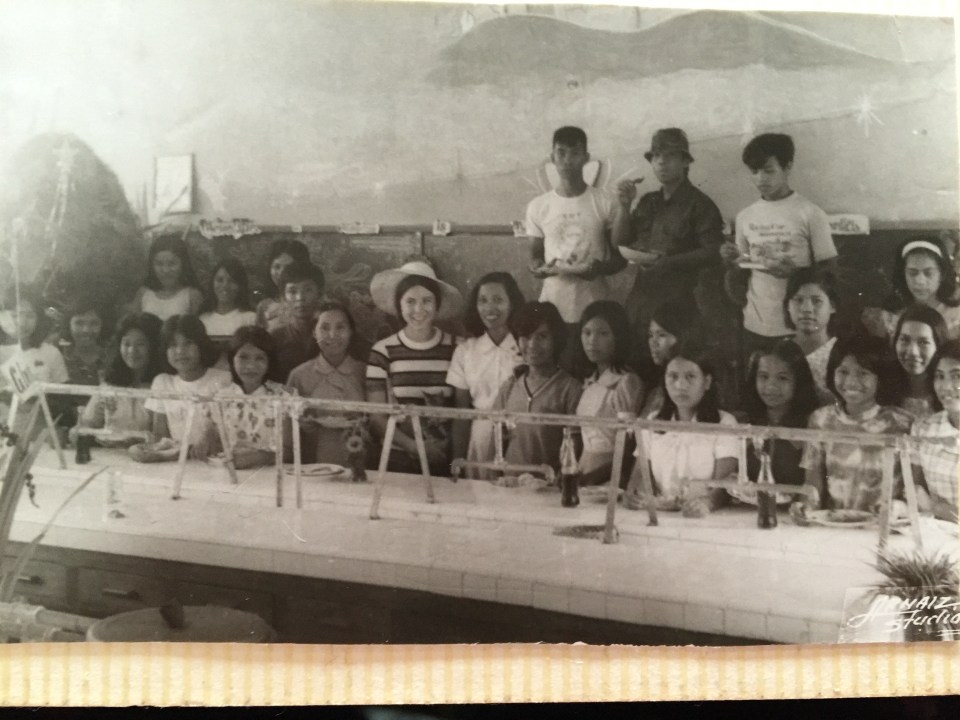
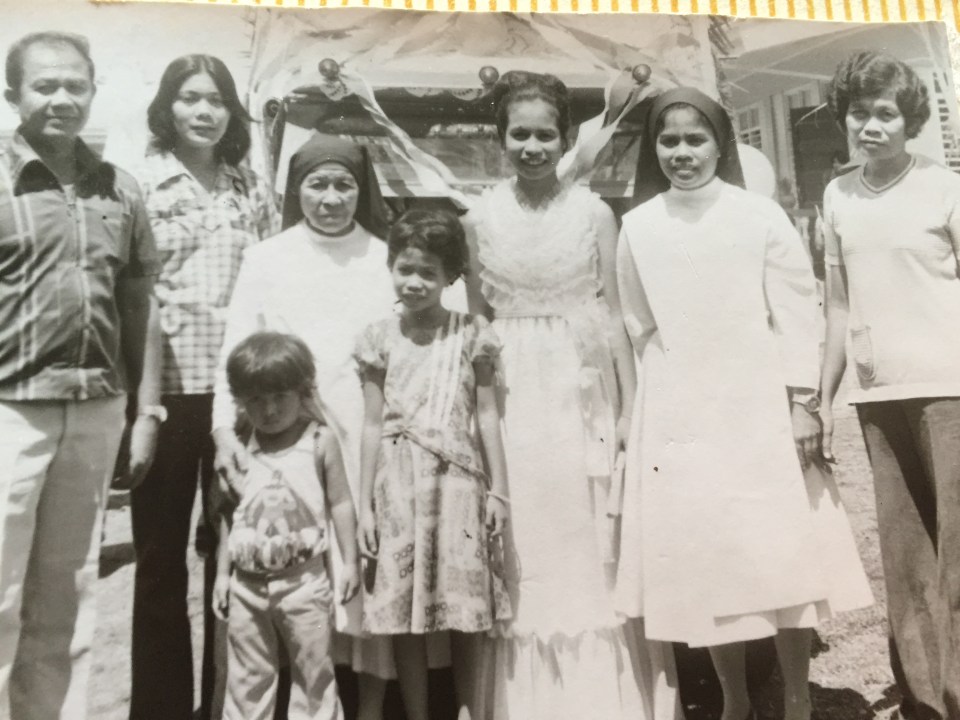
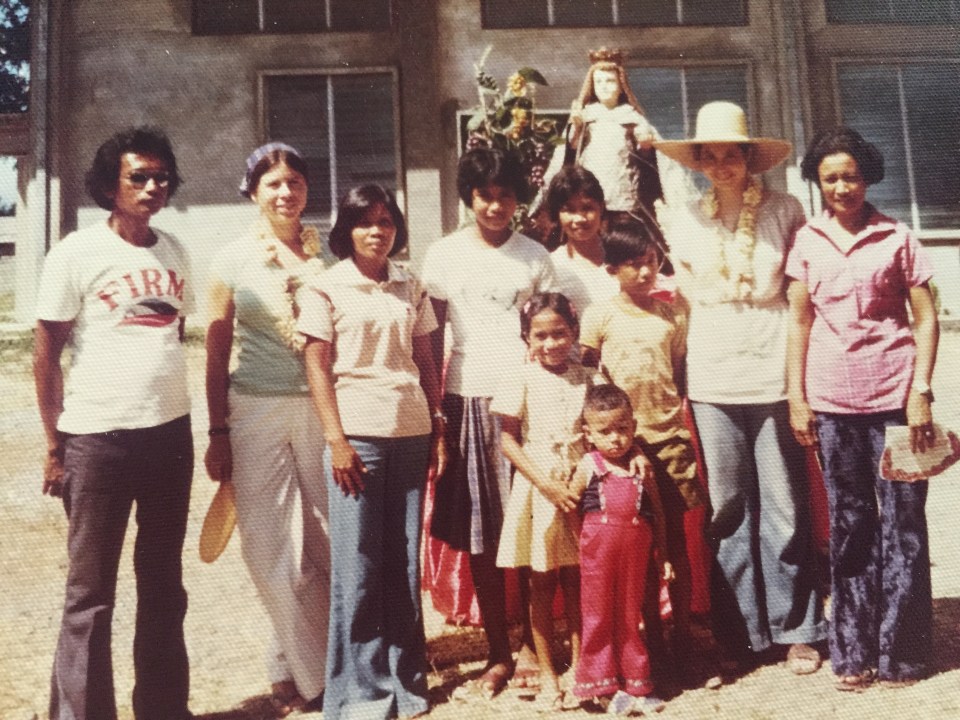
Beauty of Antique

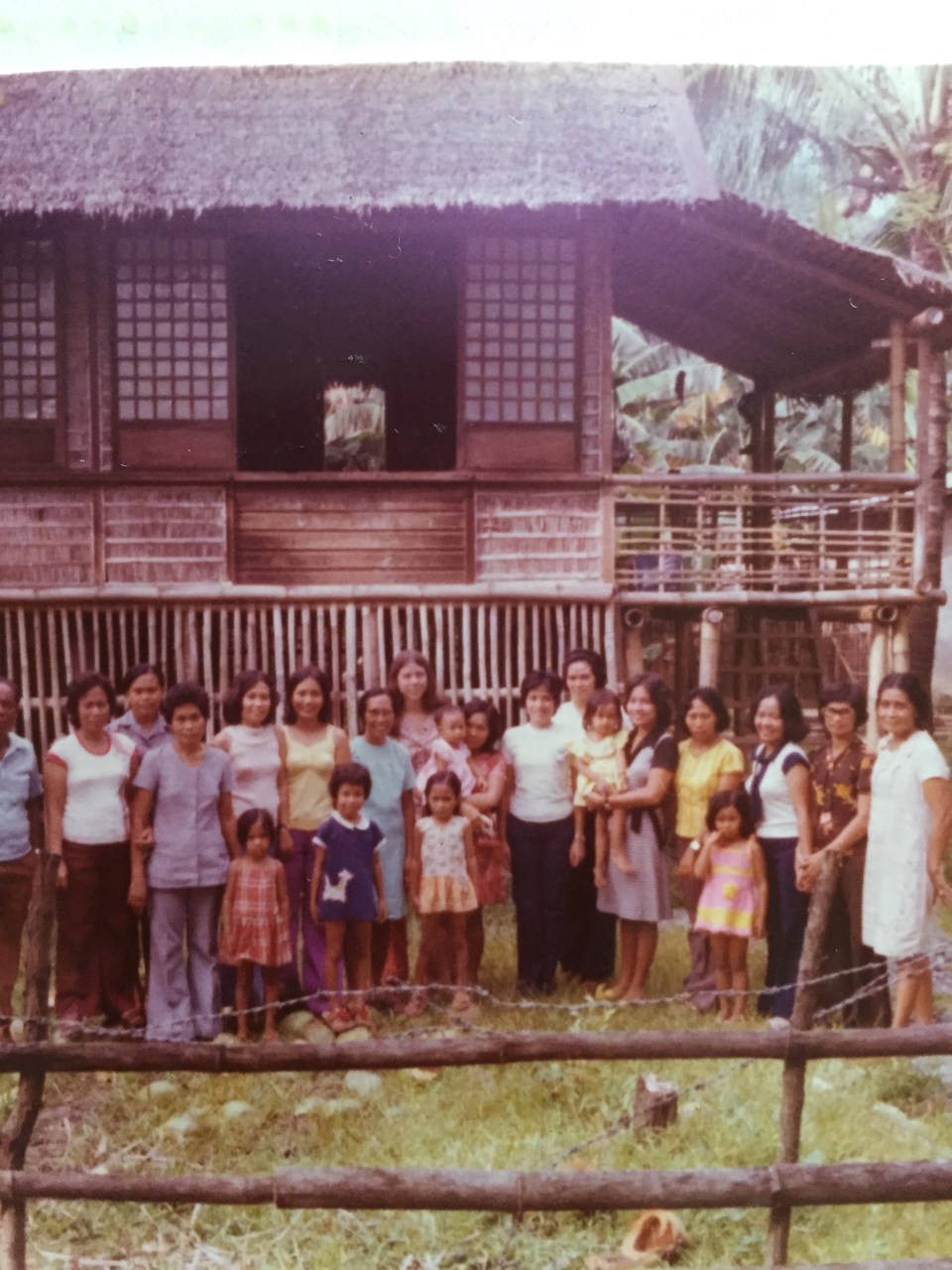
Tomorrow, Monday, I will catch a flight to the Philippines. Because of the long flight and the time change, it will be almost midnight on Tuesday night before I arrive at my hotel in Manila. After a short sleep, I will catch a flight to Iloilo and be in Bugasong before sunset on Wednesday. Here are a few sunset, and otherwise stunning photos of Antique to carry me through the long journey home. These were taken in the 1970’s.

Patadiong

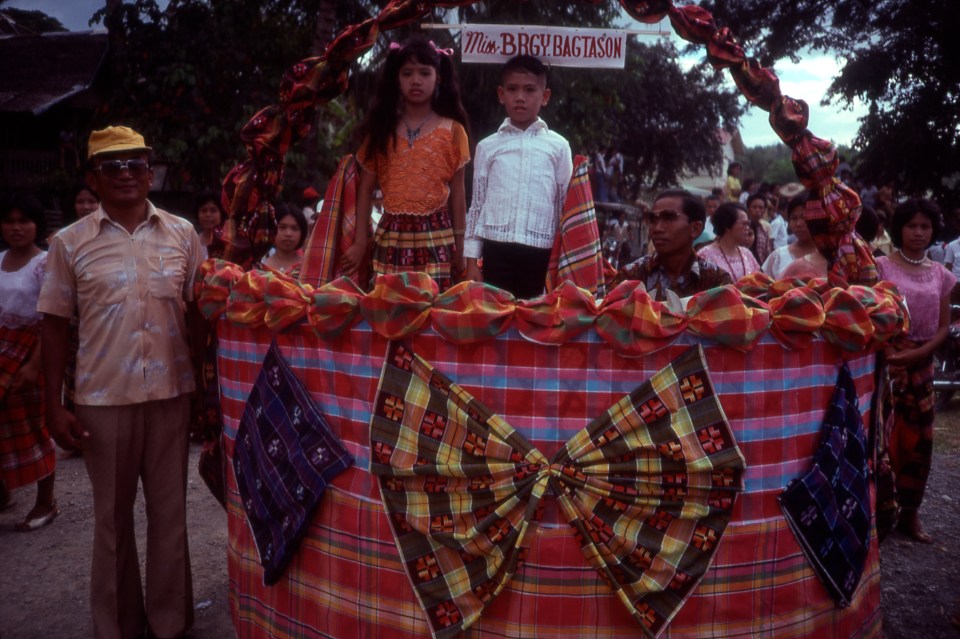
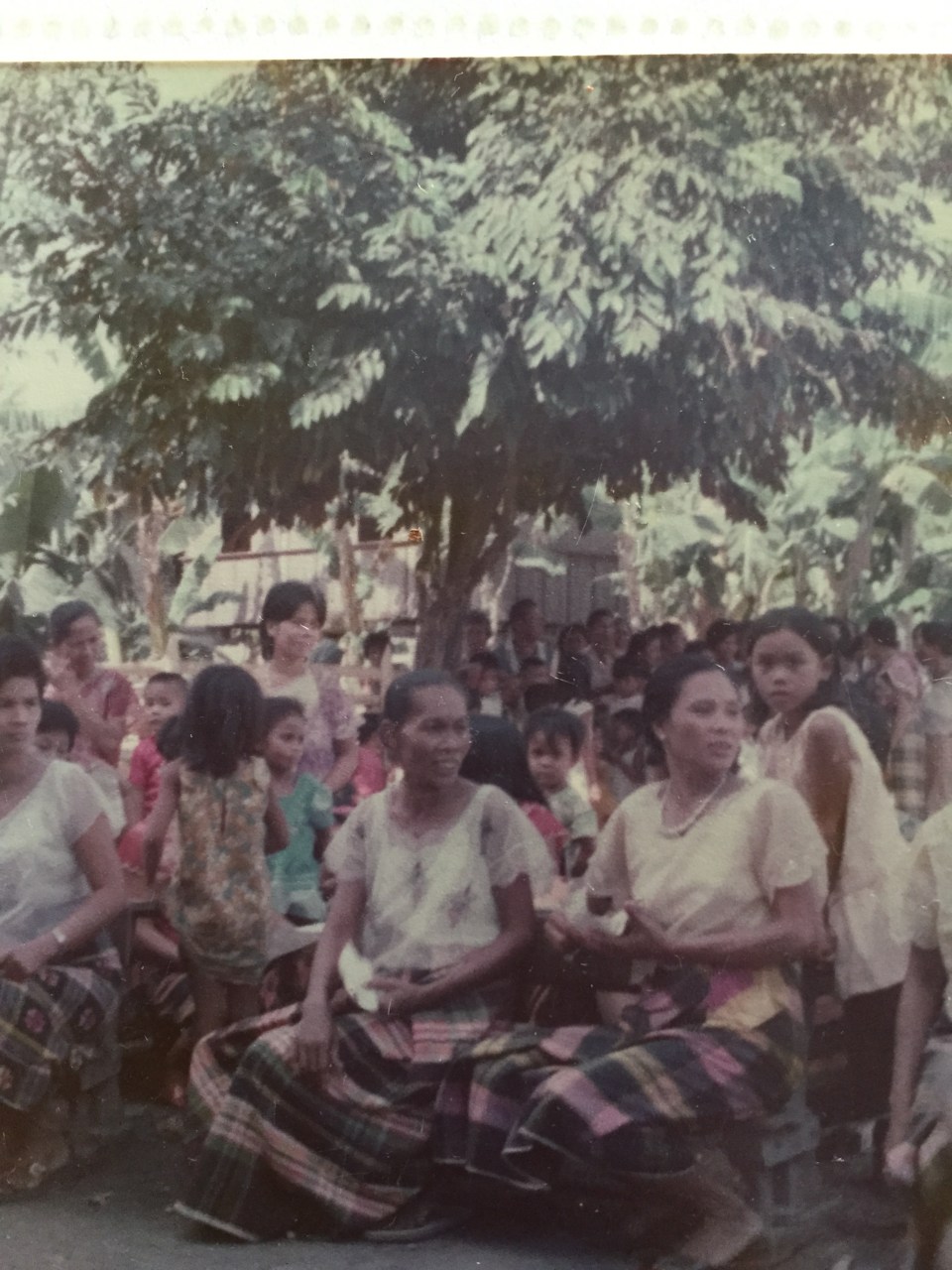
When I lived in Bugasong, the universal clothing in Antique was the patadiong. The colorful plaid fabric was hand woven and sewn into a tube that could become a skirt, a place to take your shower, a way to carry rice, a hammock for a sleeping baby, or costume for fiesta dances, among other uses. Nowhere are there more beautiful patadiongs than those that are woven and hand-embroidered in barrio Bagtason in the town of Bugasong. I still have one in blues and purples that serves as a dresser scarf in my bedroom. Here are some pictures I took of a woman weaving in her home Bagtason in the 1970’s.

Here is a Bagtason fiesta photo showing the finished patadiongs.

287-BagtasonFloat-Fiesta

January 1976

My January journals started out in Manila, hanging out with other Peace Corps volunteers and friends including Toni, Dan, Mike McQuestion, Yonky, Neal, James, Lorrie, Al, Liz, Georgia, Gordon and Phil. We went to movies, to Makati, for long walks along Manila Bay, hung out at Luneta Park, went to happy hours, went to Faces to listen to music, drank and rang in New Years all day in various parts of the world. I was sick again, but made it home to Bugasong to do a little work and to attend town fiesta.

I don’t and won’t pretend to know
why I’ve come to this strange place
and mood and left behind
those other incompleted wanderings

Return of the Amoeba

Americans have little resistance to the local parasites and we don’t throw them off so easily. By the end of December, I was sick again and couldn’t hold down food.  I went to the Peace Corps doctor’s office as soon as I arrived in Manila and was sent to have liver scans taken at the hospital. When the results of the tests came in on January 5th, my liver and spleen were swollen. So I was hospitalized again and got hooked up to an IV. In the hospital I mostly slept and slept. The first day I was wakened at 4 a.m. for enemas and hours of tests and X-rays, after which I slept again for most of the next days. James, Al, Jerry, Steve, Gordon, and Phil visited. I hated the feeling of helplessness, lying in a hospital bed. Doctors came in and poked around. The doctors told me that I have some hereditary extra thing in my intestines, sort of like an appendix. They said that it doesn’t usually show up until old age. Mine just showed up early because of the amoebic dysentery. At least I was comfortable with an automatic bed, air conditioning, telephone, and television, not to mention electricity. Eventually the doctora came in with the GI specialist and told me that I had a bad case of amoeba. I was put back on a regimen of medicines. The next day a nurse mistakenly told me I could check out, which was wrong. But I had already checked out. I ended up sleeping all day in the hotel. I was in bad shape and easily wiped out. On January 14th, with a suitcase full of medicine, I caught a flight to Iloilo and the next day I headed to Bugasong, arriving exhausted. Friends were happy to see me and I was happy to see them. I had loads of mail, especially cards, and some gifts. I was still pretty sick and I went to bed at 6 p.m.

The remainder of January I continued to have a lot of pain, be exhausted, and was weak. I contemplated going back to the hospital in Manila. I even bought a plane ticket, though I never used it. I have a doctor now in Manila and permission from Peace Corps to travel there at any time for any medical treatment. The doctor is a GI specialist who studied in the the states. I have confidence in him. Still, I have never felt this sick in the states, though it is becomng the norm for me here. For the past 10 months or more I almost always have diarrhea, weakness, pain to some extent.  I’m definitely learning to appreciate my health.

Between the return of the amoeba, and adjusting to the culture, I predict a thinner year with fewer ice cream escapes. The true sign that I am adjusting was the way I handled the Christmas present from my Great Aunt Leila. For the second year in a row, she sent me three canned cakes. The first year I pretty much hoarded them for myself, as a reminder of home and as a comfort. But this second year, I shared the first two cakes with my colleagues and friends here in Bugasong, and the third with other Peace Corps Volunteers. Perhaps I am becoming less selfish.

Birthday & Fiesta

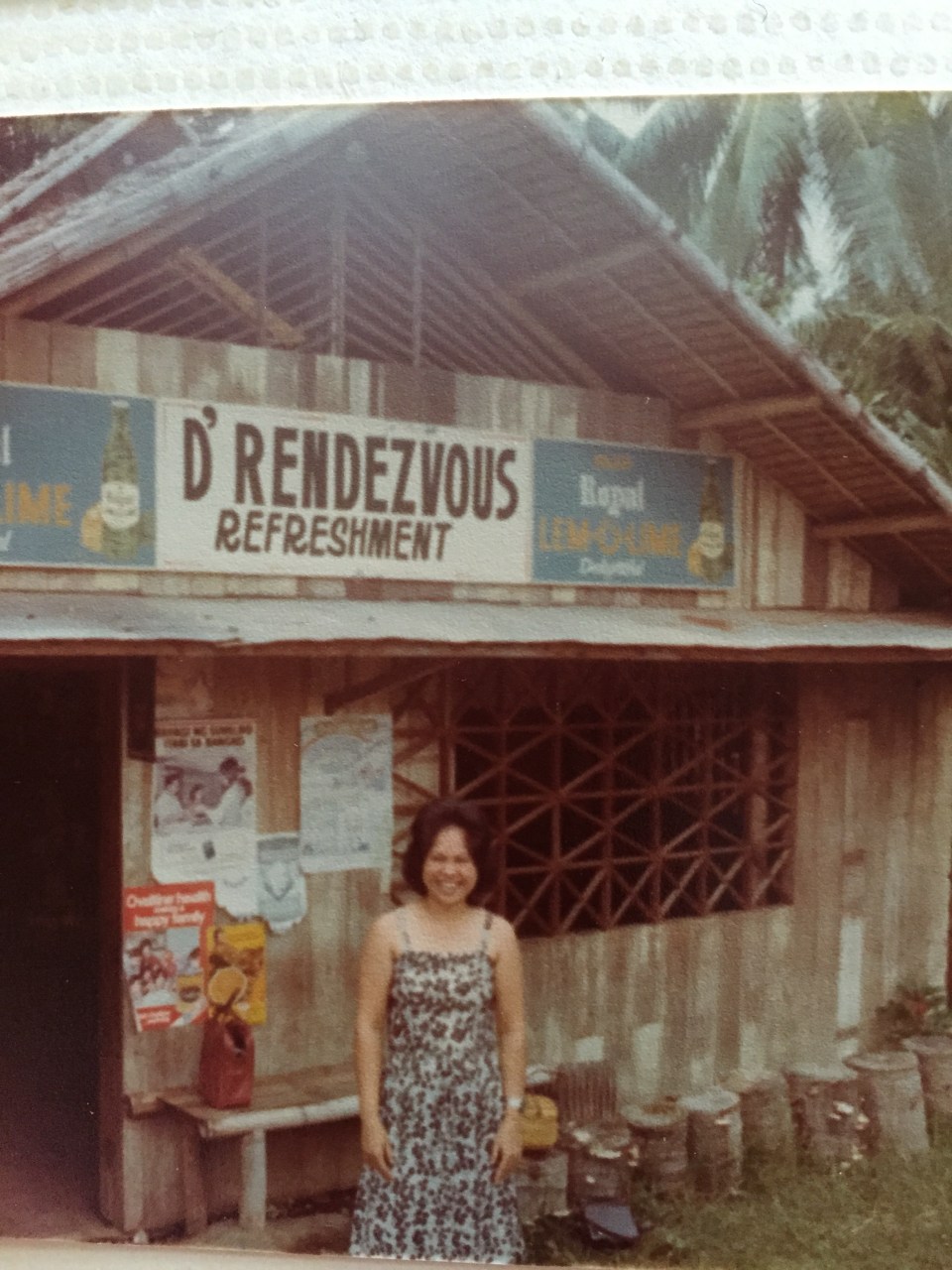
On Friday, January 16, 1976, I turned 24. I woke at 8 a.m., finished rereading my mail, cleaned my house, unpacked from vacation and began feeling at home and happy in my house again. I went to the opening of the Nutrition Fair. I delivered belated Christmas presents for Flor, Rosit, and Corazon. We all went for birthday snacks at the Rendezvous and wandered the town in the mood of Fiesta. It was a pleasant but different birthday.

IMG_0085

Only real eating establishment in Bugasong in 1976. It was across from the town plaza. This is the owner wth the best smile.

On Saturday the 17th, I woke late and shuffled around the house until 11 a.m. when I went to the Riveros. I’m comfortable there and have a good time with Peachie and Cherrie. I often drop by to iron my clothes with their coal iron, play with the children, hang out.

IMG_0107

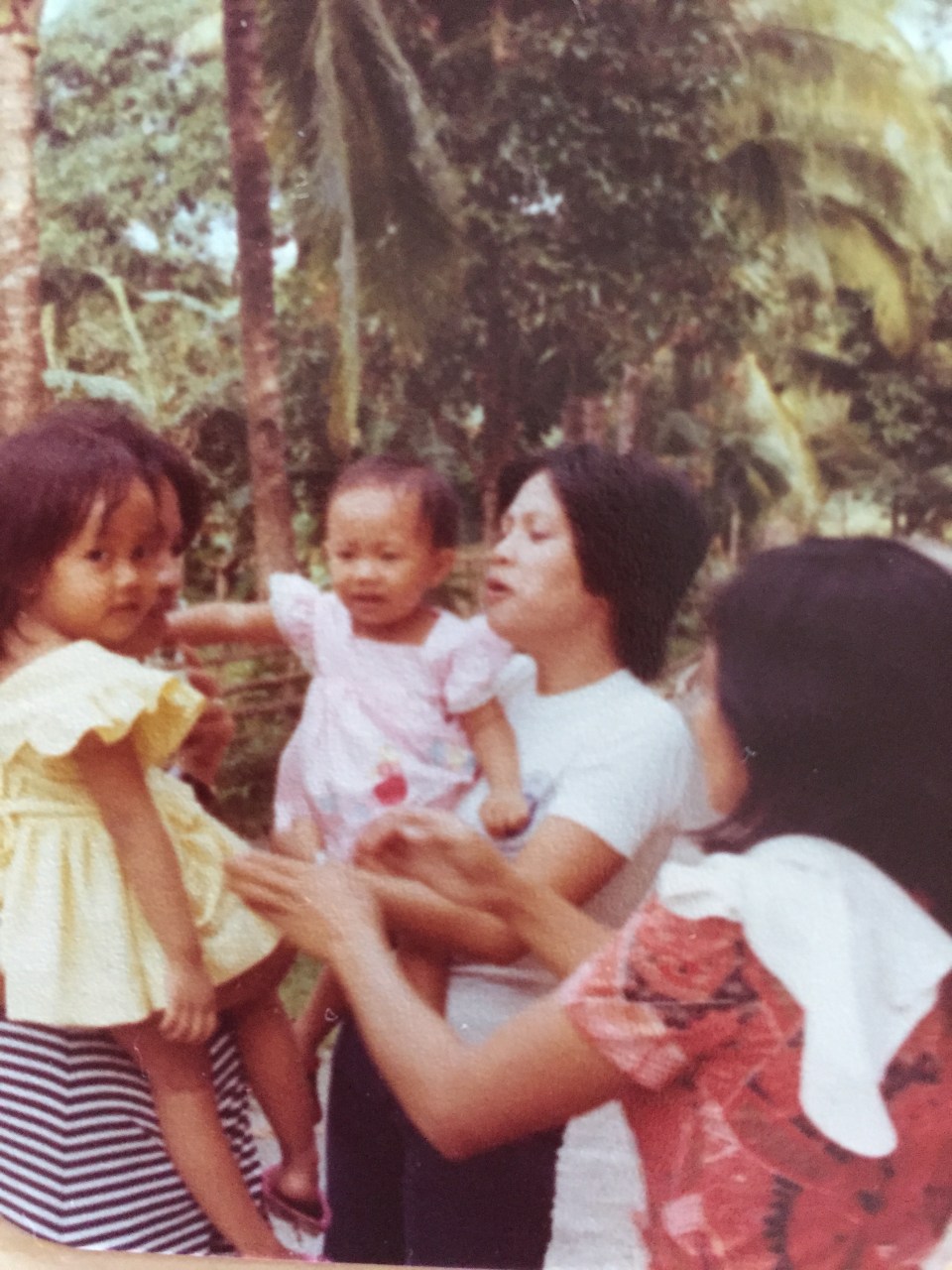
Peachie and Cherrie Rivero

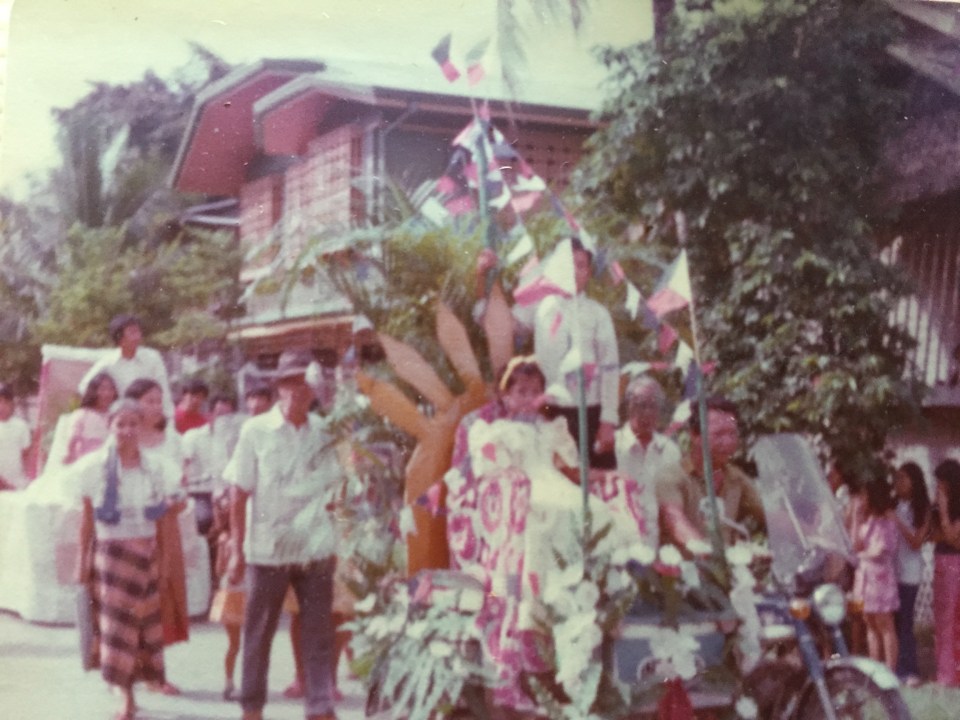
After lunch I took a nap and was awakened by the parade. Costumes and Ati Atihan style dancing were great. Then I walked to the plaza with Nene and Doctora but had to go home and rest a while. Brother Roy and a Peace Corps volunteer named Phil came up to town for fiesta. We watched old silent movies  projected on the side of the church.IMG_0081


After Bugasong’s fiesta, Phil and I caught a ride to Pandan to attend a regional Peace Corps conference in Kalibo. The ride was full, so we had to sit atop rice sacks on the roof of a Ford Fiera to Pandan. I won’t say it was comfortable, but it was fun. The next morning, Toni, Mike Z, and Mike McQ came banging on my door to wake me for a birthday cake they’d bought for me. Neat Surprise. We all went to the beach. I enjoyed myself even though I still felt terrible, was weak, and had stomach pains. We went bowling to end the day and that was fun.

Work

After the Nutrition Fair, I busied myself setting up a feeding program for the following week. I went to San Jose to schedule some lectures for the feeding program and for my next project.  I went to barrio Talisay where our Mother’s Class Community Garden had been part of the #1 winning Green Revolution Contest in the Province and the Region. Too much! With this success, our feeding project should proceed well. The mothers are enthusiastic, excited, and cooperative.

Unfortunately, we can’t hold any mothers’ classes during February or March because the two midwives and doctor will be at seminars during the two months, and the two family planning motivators are on pregnancy leave (yes, I catch the irony). All our underboard nurses have completed their training here in Bugasong (a requirement of 6 months for all nurses in the Philippines), and we have no permanent nurse at our clinic. That leaves the sanitary inspector, who might also be called up for a seminar, and myself. I guess I’ll make toilets and posters for two months. I’m sure I’ll be able to keep myself busy enough and maybe save time to go swimming late afternoons.

At the end of the month I headed off to Iloilo en route to my Peace Group 81’s mid-service conference in Dumaguete. I wasn’t excited about the 7 hour bus ride followed by a 2-3 hour boat ride and then a 10 hour bus ride to the site of our conference, but the trip was scenic. The travel was made a bit more grueling by the fact that when I arrived in Iloilo City at 2 p.m. all the hotels were filled. I dragged my suitcases around the city for four hours, trying to find place to stay for the night. At 6 p.m., exhausted and frustrated, I ran into Mike Z. and he invited me stay in the hotel room he was sharing with Neal. We ordered an extra cot for the room.

At the mid-service conference we plan to fill out reports on what we’ve done, prepare for the next rural health group to enter the country, and have our one year physical examinations and immunizations. I’m still not feeling well, and hope I pass the physical.

Floods and Feasts; December 1975

Traveling Isn’t Always Easy

On December 13th I woke at 5:00 a.m. and headed out to catch a jeepney headed north. I was excited about my Christmas vacation plans. I waited until 7 a.m. for a jeep to Pandan, but the jeep drove only one block before stopping at a station where the driver spent an hour patching three flat tires. By 8 a.m. we were out of Bugasong and it was beginning to rain. The jeep was a bit crowded with 7 small children, 4 nursing mothers feeding babies, the 4 husbands, an old man, a married couple, the driver and conductor, a teenage girl with 10 year old brother on her lap, 3 men in the front seat, 6 men hanging on the back, me, all the passengers’ luggage, and of course, and a pig on the roof. This is about an average jeep load. A little further on, we had another flat tire so stopped to change it. About 10 minutes later a jeep passed going in the opposite direction and gave us a new spare tire, which we exchanged with the tire we had just put on. Hence we stopped for another tire change.

Flat tires, however, were not our main concern, The real issue was that it was really raining hard by now and the rivers get a high when it rains. Of course, there are few bridges going north in the province. If we came to a river that was running high, the general practice would be to put plastic over the vehicle engine and drive right through the river. Right about this time I was wishing that our jeep had those clear plastic flaps to pull down over the open windows. We were all getting pretty wet from the rain and cold from the wind. Eventually, around Sebaste, we came to a river that was running a bit fast and seemed a little deep for our jeep. The driver took a minute to contemplate, then charged into the river. The engine sputtered and went out in style. Thigh deep in the water, we marched out, shoes and packages held high. I waded back for some babies and other peoples’ packages. We tied a rope to the front and pulled and pushed our vehicle to the other side of the river.

We then waited for everything to dry, mostly the engine.  About 4 inches of water had been rushing through the jeep. The jeep eventually proceeded northward, but the rivers became progressively worse. About 10 minutes later, at the next river, the same thing happened—but this time with 6 or 8 inches of water rushing through. Not surprisingly, about 15 minutes later we reach a river about 5 times as wide and really rushing. There were a few vehicles dead and drowning in the river, so we just returned to the nearest house to wait it out. One of the passengers wandered off and found a house that would feed us, so we all trooped over to the house and munched down on rice and fish.  Another passenger had donated three small fish about 6” long each. It tasted delicious, the way food tastes when you’re backpacking. It had a much needed warming effect, as the wind was blowing and everyone was soaked through. Certainly I was the only one with a protective layer of fat. Barefoot we walked back to the original house to wait.

After about 1½ hours we returned to the river to make our next attempt at crossing. We were transferred to another jeep, with a few new passengers, including an elderly lady. The old lady had everybody on the jeep looking for her smaggles (flip flops were called smaggles because they were once smuggled to the island). It turns out, they were on her feet.  Well, we all truck down to the river. One man takes his phonograph out and decides to wade across the river to protect it. The water is well above his waist and we were all sure from the way he wavered that the fast current would knock him down. But I guess he was experienced at trekking across rivers because he was successful. The rest of us climbed into the jeep and charged into the river. I had been placed in the front seat and was sitting up high, squatting on the seat, beside the driver. The water rose up past my waist as the jeep died in the water. This time the strong current was too much for me and I needed help getting back to the shore, on the side where we had started. The men who helped us back, the same ones who retrieved our luggage, had strong legs like the trunks trees. They were local tuba gatherers, who climbing the coconut trees daily to gather the coconut wine.

I was back on shore, with packages, suitcases, women, babies, and the old lady. We were all shivering, but the old lady was really shivering badly, so I held my umbrella against the wind for her and put my sweater and arm around her. I could only think of how terrible if Grandma was going through this. She was about my Grandma’s size and age. After an hour, all the men, plus men in the nearby houses, pulled the jeep back out of the water with a rope. The jeep needed to dry out because water had been rushing practically over our roof by the end of the ordeal. When the jeep was ready to head back to the house where we could wait again, the old lady wanted to stay at the river and cook rice because she was cold and hungry. I gave her bread and helped her to the jeep with her cane.

A big bus eventually showed up. We boarded the bus and decided to make another run at crossing the river. It didn’t work. Then a bigger bus followed. Our driver, about 19 years old and and 4’10, gets into the big bus and charges it across the river, barely succeeding. He then attaches a rope to the big bus that had successfully crossed the river, and he carries the other end of the rope back across the river, almost drowning as he does so. He ties the free end of the rope to the smaller bus that has not yet crossed the river. We all get on board the smaller bus and our tiny driver charges into the water with the bus. When we are about ¾ of the way to the opposite side of the river, another driver hits the gas on the big bus, which  takes off and pulls us through the river and out of the water. Water was gushing into the bus—but I was too cold and wet to care. Then this little guy drives and/or helps pull other jeeps across. Simultaneously I watch a dozen or so men carry a motorcycle across. It’s all insane. But after 13 hours, we reach Pandan—a town about 50 miles from Bugasong where I had started my day at 5 a.m. They insist that the ride to Pandan should take 2½ hours.

We spent the night in Pandan. People offered me a place to stay. A nice Filipino, also stuck there for the night, bought me dinner. He was very nice and enjoyable to talk with. At 5 a.m. the next morning, I proceeded to Aklan and finally arrived in Lezo, where Toni lives. We stayed up until 2 a.m. chatting. It was fun to be on vacation and to be with an American woman.

Toni and I had planned to travel next to Roxas and pick up Pat to join us on a boatride to Manila. But we coulddn’t get to Pat’s because everything was flooded, and the seas to Manila were really rough so boats were cancelled. We were sad that Pat wouldn’t be joining us for the holiday, and for a while, we thought that Toni and I would be stuck in Lezo for Christmas. The roads out of Toni’s town were flooded. Then we learned of a makeshift, hanging pedestrian bridge over the flood waters. We  managed to carry our suitcases across a narrow rickety bridge. It was a bit sketchy, but with an adrenalin surge, we made it. We got to Kalibo, bought plane tickets to head to Manila the following day, and stayed overnight at James and Crain’s apartment in Kalibo, though they were already out of town for the holiday vacation. The thundering rain wakened me several times during the night.

Finally we caught the noon flight to Manila and checked in at Pension Adriatico. We went from Quiapo to Quezon City where we walked, browsed through shops, had ice cream and tried to see a movie that had been misadvertised. We were frustrated about the movie and getting lost when we wandered into a scene of skaters around a fountain globe in Luneta Park. It was a nice discovery and peaceful way to end a frustrating couple of days.
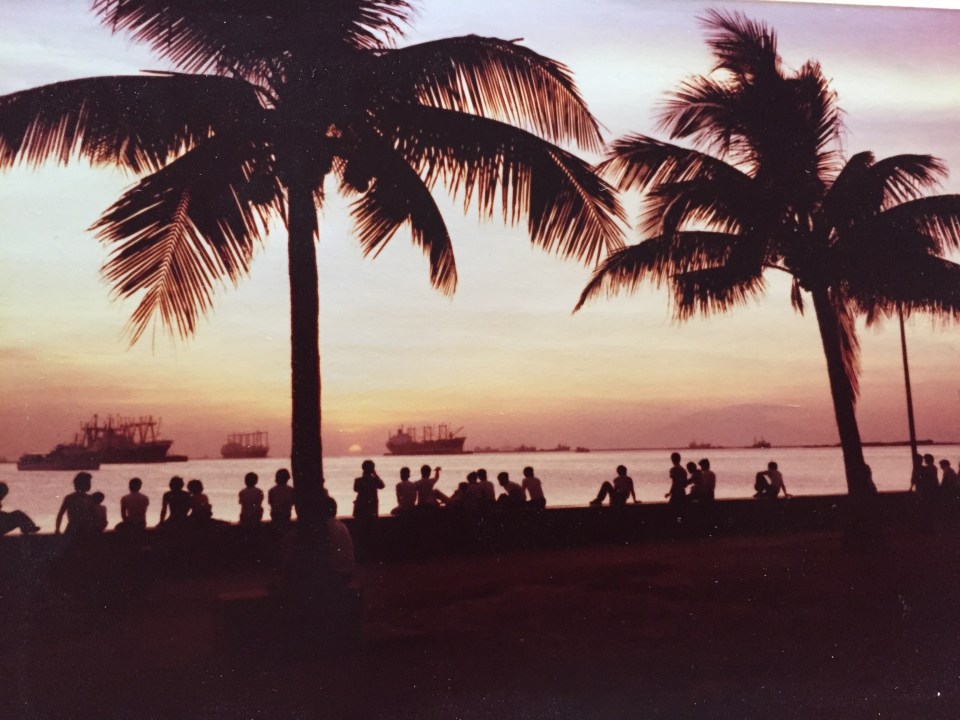
IMG_0136

Manila Bay

Much of the time in Manila was lackluster. Probably as the result of beer and ice cream, my amoeba returned with diarrhea, sharp cramping, bloody stools, and malaise.

Eventually, we caught a bus to the resort town Baguio in the mountains, where it is cooler.  It was cold (58° at night), had real pine trees and fresh strawberries. Toni and I got a place in the dormitory at Teacher’s Camp, went to dinner at a Chinese restaurant, and then to the Fireplace for folk music and mellowing out. Being pacific northwest girls, we walked back to the dorm high on brisk air and pine trees.

The rest of the time in Bagiuo City was spent around other Peace Corps Volunteers in a homey group cabin with a fireplace. We saw the Godfather II, bought sausages, bread, cream cheese, and milk, had dinner and a relaxing night at the cabin, went to breakfast late, wandered the park, went to a Buddhist Temple and had our fortunes told, made strawberry shortcake, ate treats, danced and drank. On Christmas Eve, I was sitting at The Or House swilling down gin and tonics and realized that I has a first class case of the munchies which subsequently led me to wander around Baguio in search of FOOD! I found the Holsum Bakery with honest-to-goodness cream puffs, as in miniature chocolate eclairs like my grandma used to give me on Saturday mornings. What a discovery. Earlier on Christmas Eve I’d bought stocking stuffers and that evening I hung stockings over the fireplace for the four people in my group: Jerry, Toni, James, and Mike McQuestion. The guys seemed most thrilled by the matching sock at the bottom of their stocking and wondered where they came from. Their own socks were wearing out and it hadn’t occurred to them to buy new ones. Perhaps their mothers had always bought their socks. On Christmas day we sent telegrams to those spending Christmas alone in their sites, like Pat.  I was so content giving and not receiving Christmas gifts. What more could a person ask for? I’ll tell you what: a Christmas Turkey dinner with stuffing, mashed potatoes and even pumpkin pie. Would you believe I happened upon that!! One Peace Corp Volunteer who is in the group of a guy who is in the town of a guy who is in my group—well he got turkeys. I was fortunate to be one of the 20 volunteers (out of about 150 in Baguio) to sit in on this fantastic Christmas dinner.

A couple of days after Christmas we planned to head to Bontoc, further into the mountains, but plans went askew as usual and we hung out and partied in Bagiuo a bit longer. Then Toni and I lucked into a private jeep ride to Bontoc via Sagada with 10 Filipinos passing brandy and songs around. The ride was fun and beautiful, not to mention freezing. At a rest stop I could see my breath in the air. A rare treat. Somehow James and Al the Pal made it up to Bntoc by aother route and the four of s spent a warm evening in Toni’s and my bed playing Yahtzee and eating peanut butter covered cookies without a care in the world.

One night a really weird thing happened when I went out to dinner at a hotel.  We saw an American guy, obviously career military, with his 4 year old son dressed in full miniature army fatigues. Some Filipinas mention how cute the little boy is. The father says , “Hey Sarge, why don’t you show the girls your gun. Come on Sarge, capture the girls with your gun.” So Sarge, the kid, with his back to the girls, pulls out a toy gun, points it backwards over his shoulder and fires at the girls. We hypothesized about Steve capturing girls in another 15 years.

Because it was raining, the others stayed back, but I went hiking in the mountains with  Mike McQuestion, Yonky, and some Filipinos. It was incredibly beautiful and refreshing. I have a picture of Yonky playing his flute as he hiked along. I was so high on the experience, needed no food that day. Its exquisitely beautiful here and I was energized. Stayed up late talking.
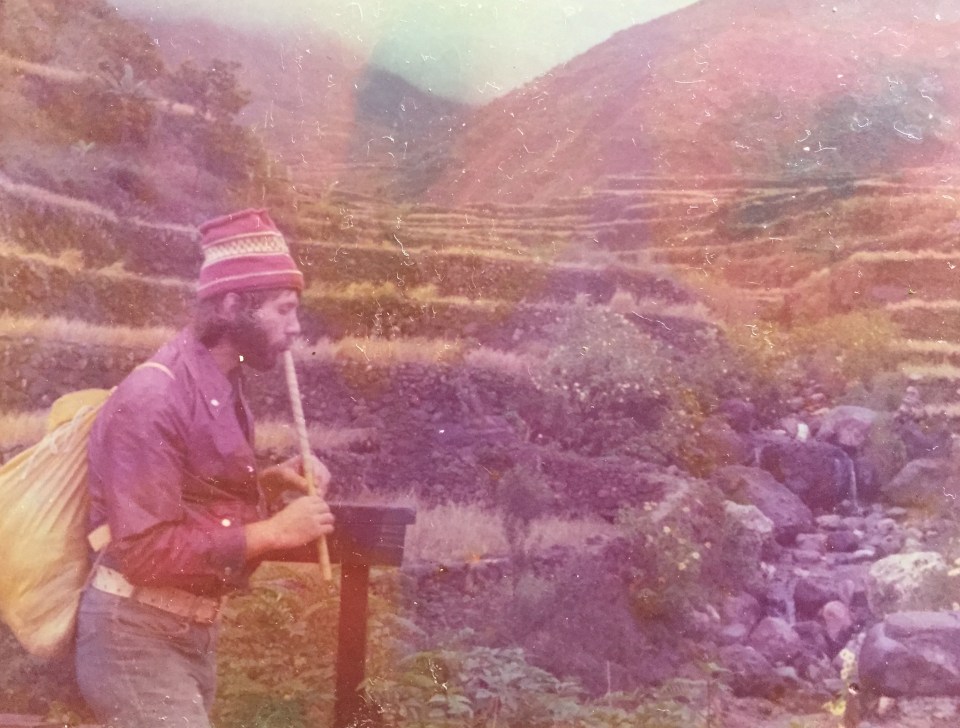
IMG_0114

Yonkers playing the flute; hike in Bontoc
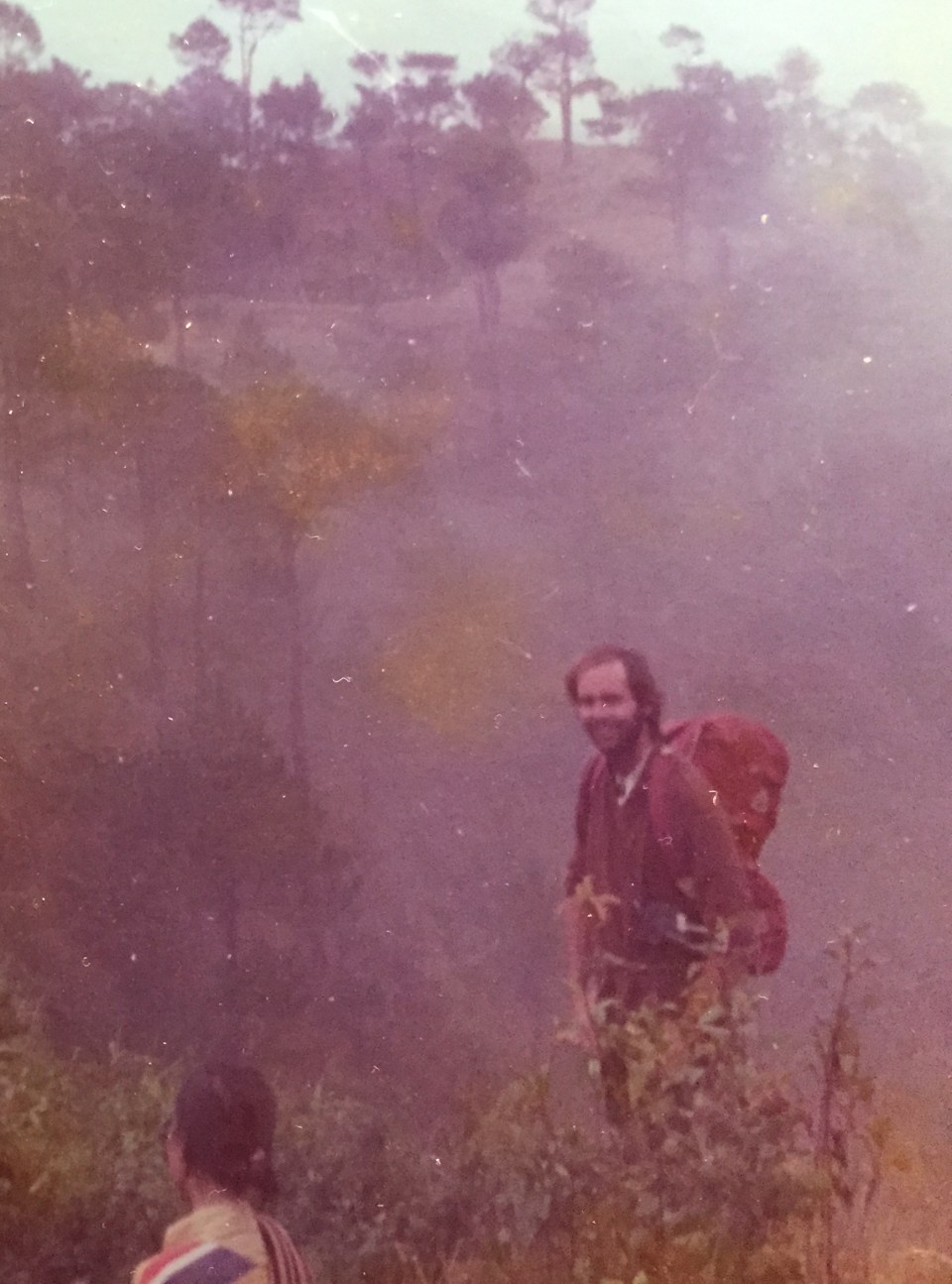
IMG_0115

Mike McQuestion on our hike in Bontoc in December 1975


In the Mt. Province, on the morning of the hike I think, I was invited to attend the funeral of an old lady. The guys were not allowed. It was very intense and meaningful. The other women had taken the deceased older woman and sat her up against what looked like the frame of a tipi. She was tied to the frame by a strap across her mouth, so that odor can’t escape, and another strap across her waist. All her wealth was placed on her head in the form of ancestral beads which will be removed by the family before burial. The only man I saw enter came to bring in food. I was asked to give a gift for her new year and place it in her lap. Then they wanted me to sing her a song but I asked if I could chant with them. That was cool with them so I rocked and chanted with them, as they would do all day). To me it was quite dramatic. At 3 p.m. she is buried in her backyard in a hollowed out short log so that she is returned to the fetal position. Pretty spectacular.

The following day, Toni and I ran around town early, shopping at the weaving school, going to the museum, and wandering. I ordered a woven guitar strap for for my sister, with her name to be woven in, from the Bontoc Weavers Cooperative of the Mt. Province. The people are pretty good weavers. We lucked into a private bus ride home at 5 p.m. I was scared shitless on the windy, dark, foggy, unpaved, narrow, mountain roads. When you looked out the bus window, you could could down the mountainside, but not the road because the side of the bus was past the edge of the narrow road. Steve, the ex-Peace Corps Volunteer on his way home from Korea, kept me entertained with his humor. We arrived in Baguio at 1 a.m.  and I crawled in bed with Toni at the Vallejo Hotel. Early morning after a cold shower I met Patty with a gigantic happy hug. She’s looking great. Spent the day with Patty and her boyfriend, then rode with Dan and Toni back to Manila at 3 p.m. arriving at the Interboard Guesthouse at 11 p.m exhausted.

IMG_0101.jpg

Al the Pal and Neal in Bagiuo

On New Yars Eve day, I went to Jaws with Dan, Neal, and Toni and to an early afternoon New Years Party in Quezon City. Finally, high as could be, about 8 of us went to dinner then bought balloons and noisemakers and acted crazy, roaming Luneta Park and bringing in the New Year with traditional excitement.


Becoming Global

One Sunday I was snorkeling, mesmerized by the beauty of the underwater life, not noticing that I’d drifted far from Brother Roy’s boat and the spearfishing guys. I wasn’t afraid, but it was my second consecutive day on the water and I sensed that I was getting badly sunburned and needed cover. I noticed a nearby boat, much larger than our tiny vessel. I swum over and asked for help. The three visiting Israeli agricultural development workers welcomed me aboard and gave me a shirt or towel to cover my shoulders. Not surprisingly, they were happy to help a young woman in a bathing suit. It was the governor’s boat I believe. We quickly became friends. One of the three men had grown up on a Kibbutz, one in Germany (arriving in Israel in escape from the holocaust), and the third was born in Jerusalem and now has a farm outside of Tel Aviv. They were really interesting. The next week I came in to San Jose to attend a seminar they were holding about Israeli agriculture. I sat between Joseph and Itzak who narrated, held my hands, and were generally warm and interesting. The seminar was followed by a small party and dinner at the Governor’s home. Itzak begged me to spend the night. I declined but accepted a future tour of Israel on my way home. They absolutely begged me to come to let them give me a cook’s tour of Israel. I certainly had nterest in seeing a society where women are soldiers and can be President. We exchanged addresses and phone numbers. They energized me. That night I stayed over in San Jose and slept at the Dutch Volunteers’ house. I’m making such an array of friends here.

Strangers telling stories
holding hands walking
arm-in-arm by trios
sharing nations,  sharing lifetimes
giving selves of vivid memories
bursting in uniqueness unimagined
never stagnant never knowing
who will pass that way tomorrow
when the strangers are departed
to another passing—moment

When I arrived back home the next day, I had visitors, three high school girls were waiting at my place and wanted to borrow books. It is hard to find reading material in Bugasong. The following day there was a young man from Australia and one from the states who’d been dropped at my house. It seems that they had missed the last transportation out of town. I never saw unexpected white guys in my town. Townspeople probably thought they were Peace Corps Volunteers. I let them stay (Mrs. Condez was still sleeping at my house so it would be okay). In the morning I took them to the bus stop at 9 a.m. They left me apples. Yum! and a Chocolate Bar!! Later, Linda de Guija and a friend dropped in to visit. Mrs. Condez came by again too. I always seem to have visitors.

In town I spend a lot of time with friends, especially work colleagues and my two families. I spent a morning at Nene Flor’s house sewing on my batik dress. Her husband killed a chicken for lunch and also gave me a really fine native hat for a Christmas gift. They’re fun people. Stopped at Rivero’s to get my blouse from Manang Pasing and was invited to dinner with ice cream for Doctora’s birthday.  I also had the Condez kids over for snacks and singing before Christmas.

I’ve had letters from Clark in Africa (he’s in the Peace Corps in Nairobi), Janice in Germany, and KB in Scotland, among others. My world is growing.

i’ve shared so many conversations
and pieces of me given to you
in my imagination
miles away I write my poetry
telling who I am
when we meet in smiles,
exhuberance and conversations
my corner in your mind
remains unempty


Nutrition Fair Plans

Wednesday morning we had our Municipal Nutrition Committee meeting with all barrio captains to plan  more about the Nutrition Fair, now scheduled for January to accompany fiesta. It should be a lot like a county fair on a small scale with a parade and program and all sorts of contests. We’ll have toilets installed in our market place in this way because there will be a pit digging contest. We’ll use pits (6’ X 4’ X 4’) for water seal toilets which are both sanitary and odor free. The winning team will win a water seal toilet for their house. Well, that’s just an idea of what will be taking place. And the school children are preparing booths, posters, and skits. The agencies are preparing booths as well (e.g., bureaus of plant industry, of animal industry, of agricultural extension; departments of social welfare, of health, of education and culture, of agrarian reform.) It’ll serve an educational purpose and nudge the people to get organized and working together—all the agencies, schools, churches, and municipal officials. It could be fun. It’s Jan 16-18, the same as my birthday and also the town fiesta.


End of the First Year; November 1975


My November post will be brief. I noted the anniversary of one year in the Philippines and was clearly settled into life with little drama. I did some entertaining at my house, and spent a bit of time with Inday, Peace Corps friends (Thanksgiving and Dave’s birthday), Dutch and Israeli development workers, and neighbors.

Rolling with
the slowly happening
easily unexpected
unopposed
never wondering
where it’s going
til it’s been

All Saints Day and All Souls day consumed everyone at the beginning of the month. Many neighbors stopped by and brought me treats on their way too or from the cemetery. It seems to be the tradition for the Holiday. They’ve been marching by with flowers and food all day. At one point I had a houseful of Filipinos, aged 1 to 80 years. Three elementary school boys were playing with my cards while a baby watched. The old man and 19 year old boy serenaded with a guitar and my banduria. Outside several high school and college age boys tossed my Frisbee expertly down the narrow dusk-lit street.

One brief sense of satisfaction—or relief
lasting the week run into party smile bursts
obliviating awareness of sneezes coughs
too-old headaches obscured by people surprises
old and young and peer group persons
taking time out to happen for you and with you

One afternoon I walked alone to barrio  Jinalinan for a “follow-up” program. The program was scheduled for 2 p.m, but there was only one member of the class present by 3 p.m. We were about to cancel at 4 p.m. when ten women arrived. The speaker began, but soon a cacophanous rainburst on the tin roof made it impossible to hear for twenty minutes. We huddled into the structure without walls, trying to avoid the leakiest spots under the rusted roofing. I had a strange impression of mob tactics being used in the class by the lecturer.

blending into the place
of last year’s awkwardness
passing this season’s adolescence
of compounded frustrations
deserving laughter
but fleetingly falling
into lethargy
and non-exitement

I went off oral hormones (“the pill”) temporarily and became extremely moody and experienced unpleasant physical symptoms. I also had a cold and cough for a couple of weeks. Consequently, some of my journal- and letter-writing reflected a crankiness and decreased tolerance for everything. I complained about dirty clothes, drop-in visitors at dusk, bumpy squashed rides, the cost of necessities, and a local woman who came by to complain to me because she didn’t have enough money to buy bread. Bread here is about 15 times more expensive than rice. I also don’t buy bread.

share my realm of peace
disturb this solitude
with a burst reminding me
i’m living beautifully
thankful that you’re jealous
of this life
i can surround myself
so naturally

Chinese Acrobats

I went to Iloilo with other volunteers and a Filipina to see an Acrobatic show from Red China. Getting the tickets turned out to be an experience in itself. I lined up for tickets early with Tom, Dave, and Bebe. I then spent a treacherous afternoon, in the most incredibly crowded line, for last chance tickets to the show. It was a mad crowded buffalo stampede of hot sweaty bodies in the heat of the day. The line had completely disintegrated into a mob before the ticket window opened. Bebe couldn’t get through and backed off. Bob and Dave were large enough to push their way through, but it would have seemed rude and abusive coming from tall white men. But I got through, drenched in everyone else’s sweat. I couldn’t move by my own free will, but was propelled forward by the crowd. I might have given up, but I couldn’t move. I felt as if I was grubbing for limited food rations in a refugee camp, or at least an extra in a movie about desperate situations. I believe that I was successful because I am stubborn, and because I am an American female. There is an idea that American women are fragile. I think some of the Filipino men were a little less aggressive because they thought I would break or surely die. As it is, I’m sure I was the only female who got through to the ticket window to procure tickets. It was pretty much a show of power and macho rudeness. Some men were buying their one ticket, then climbing on the heads of the crowd to place themselves back at the front of the line for more tickets.  But I didn’t give up. I stayed in line from 2 until 4 p.m. When I reached the ticket window, I asked for four tickets, saying that we had been there first and pointing to my tall friends, now far at the back of the crowd. I don’t think the clerk understood English well. I didn’t speak Ilongo. The ticket seller finally relented and sold me four tickets.

I headed back to the hotel with the group to take a shower, wash my hair, and eventually attend the most fantastic acrobat show I ever hope to see. I’ve never in my life seen anything so incredible.  It was stunningly perfect with fantastic control and discipline, spot-on choreography and great music. The narration was Chinese and Filipino.

It’s too bad the Red Chinese performers aren’t allowed to talk with any one or even tour the country they’re visiting—which we were dramatically aware of. After the show Tom tried to talk to one of the musicians who played a weird instrument like one Tom had picked up in Hong Kong. Tom had his instrument with him. When the Chinese musician saw Tom’s instrument, he beamed but quickly shook his head and turned away. This was repeated three times or so. It was clear that the musician was warning us off, afraid to engage in communication of any sort. Then Dave tried to shake hands with a Chinese performer who was passing by him. The guy swung out of reach and wouldn’t look at us. One of the performers had to climb up a post near where I was standing after the show. He gave me a big smile then hurried on up the pole as somebody yelled at him. We thought perhaps it was because we were Americans and Chinese:American relations were still closed. But we later learned that the Chinese troop members were not allowed to talk to anyone, not even the Filipinos running the university where the performance was held. For their three days in Iloilo, all the performers stayed on one rented floor of a hotel and were not allowed out, except on a group bus to go to the two evening performances. Even the Filipino guards weren’t allowed to talk to them. It was all very political with many banners saying things like “Long live friendship between the People of China and the Philippines”. I can’t imagine that they made much money; my ticket cost 3 pesos (about 40¢) and the gymnasium was really small.


Victories, Autopsies, and Giant Butterflies; October 1975

Typhoons, Earthquakes, Geckos, and Giant Butterflies

The weather has become blustery at times as the rainy season descended on Bugasong. Time began melting away as I hunkered down in town, hemmed in by unpredictable weather. I am confronted by darkness and pouring rain, or strong winds from an imminent typhoon when I walk home from the barrios at the end of the work day. In the evening I cooked by the flashes of lightening strikes until I thought to light my lantern. I haven’t gone to the city (Iloilo) for over a month, and probably won’t be going for that long again. It is definitely rainy season. There’s not much to do in Antique during rainy season—no movie theaters or ice cream parlors, no bowling alleys or television, no hikes or swimming. The mud is incredible. I still walk every afternoon to the barrio Mothers’ Class, but invariably it pours on the return trip and I kick mud up my back side as my flip flops are sucked into the mud and forcibly released to flick mud upward with each step. If I dwelled on it long, I’d be missing the autumn golds and oranges of home, instead of making my dance to the lulling warm sunrise mornings and the afternoon tropical rainburst melody on the grass roofs. I’m bending to the rhythm of pounding rains and taking it easy.

The insects seem to haunt me even more frequently during this season. They show up with lightening speed in every nook and cranny where a crumb might reside. Brother Roy lives in the provincial capital in a convent with real walls, linoleum, electricity, windows, and housekeepers. He swears that no less than three herds of ants will migrate to a dropped bread crumb within 30 seconds. He claims that the extended time period of 30 seconds is an artifact of the fact that he lives on the second floor and the offenders must first climb the flight  of stairs.   All in all though, I think I prefer the insects to mouse races in the bedroom. Fortunaely, there aren’t too many mice here because the cats are all starved; not to mention that people will eat the rodents.

In my own nipa hut, the insect war plunges ever onward. I’m forever slapping a mosquito off my arm or squashing an ant near my bed to add to my quota of ants, spiders, cockroaches, beetles, wormy striped dealies, flies, cocoon thingies on the walls, webs, giant spiders, varied colored giant beetles, fleas, ticks, gnats, fruit flies, and the dealies that hop around the lantern at night crashing into walls and me (grasshoppers or locusts or praying mantis or some such bothersome thing). Albert Schweitzer I am not. With pleasure I kill every red ant I see. Lately I was getting pretty conceited, like a triumphant green beret soldier, successful in keeping the enemy at bay. I’ve been keeping things incredibly clean, which is quite a trick with open air windows, bamboo slat floors, and grass walls, not to mention the absence of a  refridgerator and cupboards. I took pride in the accomplishment of keeping critters out of my food. I thought my girl scout diligence had fairly well licked the critter invasion when, to my surprise, I found half a piece of cake eaten. The piece of cake was a gift and a rare treat, reminiscent of home. I immediately knew that the dramage could not have been done by ants because the cake was covered in plastic and set on a dish in a larger tray of water. To my knowledge, ants can’t swim, flys can’t get through plastic, and cockroaches wouldn’t easily hurdle both obstacles. Alas I was cursing the lizards when, to my surprise, I spied a cat on the premises this afternoon. It came up through the trap door over the ladder that descends to the toilet. Ah well, at least she left me half a piece of cake.

One morning I woke at 1:30 a.m. to a sensation of rocking, thinking the bed was vibrating from the dog shaking on the porch. But then I heard the half empty bucket of water sloshing over in the kitchen and the heavy petromax lantern began to fall off the table. Then I recognized the swaying impact of an earthquake on a stilted bamboo house.

During the typhoon I stayed in my hut and read for hours, holding a bucket out the window when I needed water for cooking, washing, or the toilet. Typhoons are perfect opportunities for reading books like War and Peace to soothe the melancholy from the full moon being obliterated by gray skies for six days. When at last the typhoon passes, the streets are messy with downed leaves and debris, but the air feels temperate and spring-like—not too hot. The week following the typhoon offered welcome dry sunny weather and a chance for outdoor activities.

There’s a giant gecko (“Takah” in the dialect) living in my house. He makes loud noises at night for about two minutes and he eats cockroaches, so I am happy to have his company. Some of the people here are scared of the geckos because they believe that if one touches your skin,  you can’t get it off. Like suction or something. I’ve never met anyone who this happened to. My gecko and I are just casual acquaintances boarding in the same house. I don’t think we’ll ever be intimate, so I haven’t anything to worry about. The guy is about 10 or 11 inches long—tail included. He’s gray with blue and red markings and buggy eyes like a frog. He’s hanging on the wall about four feet away as I write this. He pretty much sticks around the lantern at night to catch bugs. And considering I pretty much stick around the lantern to read and/or write, we see a lot of each other. The only time he scared me was when I met him on my bedroom door at eye level this morning during daylight hours. I prefer him to keep to his own territory and remain predictable. In fact, I don’t like him to come down to my level in the same room. I like him better in the rafters. I really need a name for him.

One night I was upset because I was certain that there was a bat in my house. For some reason, I’ve never been fond of bats hanging out near me.  So I went out on the porch and opened a window so he/she could peacefully leave. I waited a respectable 10 minutes, but it was a no go. So I bravely reentered the house, because I didn’t want to hang around any longer outside in my nightgown. It turned out to be a giant butterfly or moth with a wingspan of 10 inches. The butterfly has turquoise shiny diamonds on his wings and otherwise is mostly brown, beige, and black. It’s really beautiful. I wish I had a butterfly book to look it up. I asked around and none of the local people here had seen one yet, so I guess they are not the most common. Maybe I should ask some one older because a lot of things are rare here now because a lot of the natural life was killed off during World War II. (Note: If it had been 40 years later, I would have taken a picture of the butterfly or moth with my smart phone. Instead I drew a butterfly/moth; drawn like a triangle with a downward point and 3 lines down the center of the triangle to look like the body of the butterfly. Labeled from the tip of the right wing to the downward point of the triangle where the body ends, it says 8”. Then the top of the triangle, that represents the wingspan, it is labeled 10”. There are 2 diamonds on each wing, and little zig zag edges to the wings.)


Relax Lang

You don’t have to be long in the Philippines to hear the phrase “Relax Lang”. It means, as it sounds, just relax, or “relax only”, “Chill Out”, “Hang Loose”, “Take it Easy”. As I rounded out my first year in country, it was no longer a catch phrase, but a way of being, as evidence by snippets from my daily journals and letters home:

  • During the rainy season, as I stay in town and lack the more obvious joys of ice cream escapes, visiting Americans, or swimming (except during dry spells), I’ve been kicking back and reading or moseying.
  •  I’m never overly busy; it’s an easy pace. I almost always have the evening entirely to myself by 6 p.m. I’m able to have the physical discipline I want and then time to think, read write and be okay.
  • Woke naturally before six, even though I read and wrote late until midnight or after. We’re early risers in the Philippines.  I love life without an alarm clock.
  • On Saturday morning I went swimming in barrio Guija with some children who had invited me. They gave me coconuts. I feel myself blending in. All-in-all a perfect Saturday with sun, exercise, visiting, playing, reading, and relaxing.
  • Sunday I woke late, took my time dressing, watched the parade of St. Joseph’s students pass, but didn’t leave the house. I appreciated my privacy—read, cleaned house, did laundry and worked a little on my chlorination project. I feel ready to begin another week tomorrow. Far better than life in America!

    Music makers consecrated

               the naked house of my solitude
               so secured by others
               so entranced by their own song
               notice not me writing
               solitary thoughts
               cross-legged by their side.
  • Am blending solitude by doses with socialization as needed
  • Picked up my new pants at the seamstress, came home, cleaned house, polished the floor, fetched water, went to the store, did my exercises, cooked vegetable soup. I feel like a member of the community today, not a stranger in a strange land.
  • Saturday I spent nearly the whole day writing or reading Walden or relaxing-lang (a Philippine term meaning just relaxing)—enjoying the colors of the day and the quiet of my own company. I rarely visit the other volunteers in the province (though there are only two left because two quit). I feel as if I’m accomplishing something by my experiment in life-style alone. I’m learning how to be my own friend—what are my real likes and dislikes –where is my self-discipline. If unlimited, –where does my mind prefer to wander?
  • I went to the Riveros and to market. Am feeling the easiness of life here. Not so artificial as a Grocery store with canned and packaged foods. Will I ever be able to go back to that rigamarole? Happily, I find myself drawing closer perhaps to my grandmother’s or some past generation—with habits of a less technological age—which I definitely prefer.Market Day is only people on parade
    I struck a bargain not because I cared
    but each culture has prescribed games
    to honor the local currency
    here of all places where truth outs
    I’m trading my labor for your fruits and fish
  • Went bathing in the river and eating young coconut with Celsa’s family.

    IMG_0119

    Celsa’s family

  • We went to barrio Camangahan. There was good attendance. The people are relaxing with me and vica versa. During the class I sat comfortably by Manong Flor, an arm around my shoulder.
  • Spent most of the day at Cubay fiesta, listening to singing and guitar music, relaxing, enjoying. I’m contented and have time to spare for people.
  • I’ve had a sore throat and didn’t accomplish much, but I’m not bothered; things are going peacefully and pleasantly enough.
  • I meditate in my own way when I walk to the barrios, take a six hour bus ride, swim in the ocean, do my hand laundry, or fetch water. My body much takes care of itself and my mind travels to new places. Most understandings come at such times.
  • I stopped at Antique Doctor’s Hospital to see Inday. It’s good to have friends; to know someone is happy to see you and to share smiles.
  • It’s easy to get lonely and miss the Cascade Mountains, my ten-speed bicycle, Baskin and Robbins ice cream, television, wearing sweaters, down sleeping bags, Christmas, bookstores, ferry boats across Puget Sound, friends singing, movies, records, my sister. But when I get a letter and read of western hassles,  I’m happy to be right here. I say to myself, that could be me arguing or biting my lip. I could be depressed by bicentennial propaganda. Instead, I stretch out on the bamboo, fetch a couple of buckets of water, worry about nothing, and let my mind take me where it will.

there is time
when no time elapses
no choices made
nothing left undone
no alarm clock
needed impulse
directs activities
unrelated
following in succession
without break
no questions

Small Victories

The days pass quickly with a free feeling, getting exercise in the hills and busily working with only minor frustrations. All the little errands get vaguely easier because people know me now. I have a sense of being part of the life. I keep busy with a hundred errands for my work and feel satisfied to carry out many things in the dialect when I travel about the barrios alone. Some days the work brings me the opportunity to have a healthy walk and enjoy the scenery, like the 14 kilometer walk back from Bagtason, a mountain barrio. I’m much better off than many of the volunteers who are doing nothing work-related. I prefer to accomplish some work, not in terms of obligation to the great US government who is paying me, but in terms of the people here, because they’re so kind and generous. They literally would do anything for me. Giving away the best you have is really the way of life here. Maybe some of it’ll rub off on this one selfish Americana.

This month we held the fifth graduation for the Mother’s Classes of my Nutrition Edcation Project. In each barrio I spend about three weeks practically living in the barrio from sun-up to sun-down. I do house-to-house surveys , weigh the children, distribute invitations, set up an afternoon class series, get the visual aids prepared, remind guest lecturers, get diplomas ready, and more. We try to hold clinic in that barrio some morning concurrently and I make it a point to give a special, personalized invitation to malnourished or sick cases I have uncovered during the house-to-house surveying. I also prepare and distribute chlorine bottles to the mothers for water purification. We’re now involved in follow-up projects: planting vegetable and bean gardens in the same barrios. In Talisay I was very satisfied with the large number of enthusiastic mothers who met for our follow-up to the original Mothers’ Class program. We hope to use the nutritious foods in cooking classes, and feeding programs for the small children.

IMG_0096

Mothers Class Graduation

The successes of work may be a bit unrealistic because everyone in town supports me and pampers me so much. ‘Sacrifice’ is a favorite expression here. Everything I do is considered a sacrifice, e.g., walking to the barrios, living in a nipa hut, riding public transportation, working in the barrios. It feels like no sacrifice at all. I enjoy the life and in reality, the successes are not mine. My role is mostly organizational. I am here to act as a catalyst in coordinating the efforts and enthusiasm of the different local agencies. The framework is here but many local agencies get caught up in paper-pushing and neglect the field work. I get them out in the field, actually the barrio. So in reality, the local people do the real work. My favorite part is the house-to-house surveying, especially talking with the barrio people who seldom leave the barrio, except maybe to go to market on Sunday. But even surveying gets tedious under the hot sun.

IMG_0094

My colleagues from the health center

One day we held a meeting of the Municipal Nutrition Committee. Supposedly it existed before I got here, though it had never convened. I organized it and went to the town hall a little early for the 10 a.m. meeting. As it turns out, most of the attendees were already arriving, but for a different mayor’s meeting that was supposed to be held at 8 a.m. I sent for the rural health center colleagues and our meeting was held first, on “American time”, at 10 a.m., as scheduled. It was great. We made good plans and I felt a lot of community commitment. We’re planning a community “Health & Nutrution Fair” for the end of February—to involve the schools, local agencies, churches, etc. Rainy season will be over, but hot season will not yet have arrived. School will be almost out for the summer break. The weather should be perfect for an outdoor fair with games, programs, prizes, information booths, souvenir stands (crafts made by the vocational High School), etc.

Some days the work is more unexpected, for example, when I was running a lot of errands around town for my projects, Mr. Solis gave me a tour of Antique Vocational School (AVS) and I had some pastries there made by students. I’m really impressed with the school. There should be more such high school/vocational schools for students in the states. I was later asked to be guest speaker on their day devoted to “scientific-mindedness”.  I have been chosen because the students feel that I am “the one and only scientific-minded person in Bugasong”. What did I do to deserve this? Perhaps that’s what I get for going to college. Anyway, I couldn’t turn down the kids; they’re third year students, equivalent to 9th graders in the U.S. (Middle and High school is only four years here—rather than six.) The weekend before my speech I was stuck overnight in San Jose. I got up at 3:30 a.m. to catch the first jeep heading back to Bugasong, but because of a three-day storm, there was no transportation at that hour. It was weird walking around alone in San Jose before daylight. The capital city, a small town really, was completely empty because of the rain. I did get back to Bugasong, changed, and ran to the Vocational School to be guest speaker. It actually went well. I enjoyed it.

IMG_0122

Visit to Antique Vocational School (AVS)


Autopsy of Violence

Went to San Jose just to get away I suppose, but it seems to have little to offer me now, so I returned to Bugasong by 3 p.m. for a birthday party of Florita. I unexpectedly ended up participating in the autopsy of a 20 year old boy who was stabbed (bolo-ed) to death the previous evening by an “enemy” as he walked home from a serenade with his “barkada” (friends). There were 16 wounds from the waist up, including head and one slicing the arm through both bones so that the hand just dangled by a piece of skin. No one was crying. The body had lain on the front step of the Center since 9 a.m. D.O.A. People were not shocked or even seemingly disturbed, merely curious. It was not seemingly an unusual occurrence. Less of a crowd gathered and their attention was held briefly than for Eking when he was chained as a “mad” boy at a court yard of the municipio. The victim looked like a war victim. I understand why fear is predominant here now if violence is so ordinary and possible. How could one person do such a thing to another?

No one was prepared to assist the doctor who came down from Luauan to conduct the autopsy. So I assisted, measuring the depth and number of wounds as someone recorded the results. It is the reaction, or lack of reaction, from the local people that stands out in my mind. The actual autopsy was like anatomy class—scientifically distracting. I found it easier to deal with than the stabbings of people who live and come in to our clinic in pain and scarred or deformed.

Here on stilts
among strange fruit
palms holding me
feeding the awkward creation
upright and lugging
pails of water
to wash those artificial
linked pretensions
where is reason
mutilated young body
with no arm held today
killed last night
with fisted palms


Some Things Still Surprise Me

Went then to Rivero’s house to see the boy baby that the Doctor and Doctora bought today for 100 pesos. The baby’s mother had lost the older child to malnutrition and was unable to care for the baby. The boys name is Ricky.

Here he is Ricky a couple of years later with lolo tatay, Manual Rivero Senior, playing the banduria

They really celebrate All Saints Day (Nov 1) and All Souls Day (Nov 2). They take flowers and food to the cemetery for all the “Souls” (I wonder if the dogs eat it). Then they have a mass at the cemetery. They eat leftover special foods or take it to neighbors like me.

I found a 1934 book on Seattle rotting in the Bugason Public Library.

A “Child of God” (not quite sure of the origin of that religion) could see it in my eyes that I will one day be one of them.


Friends; September 1975

When I was first in Bugasong, I was all alone, though I never had privacy or solitude. By September I had many friends, and a perfect blend of privacy and solitude.

When I  moved into my own nipa house, I remained close to the Rivero family, but also became much more accessible to the rest of the community. I could feel people opening up to me and dropping by my house. And now I had a second family, the Condez family, where I rented the nipa house. In addition, having more private time allowed me time to reflct and write more. The chores of survival also added to my well-being, giving me regular activity like doing laundry, pumping water, cooking, sweeping, and polishing bamboo floors. It was a wise choice and a fundamental transition that opened me up to further growth.

Home?
The heat in my head calls me
to sleep that doesn’t replenish
a body wants to somewhere home
last year still didn’t know I had
that place where I have grown

Day-to-Day Life

Though the first of September was filled with ordinary activities, including Mothers’ Classes , hanging out with the barrio people, and a game of song-ka with my host sister Nene in the evening, on the second of the month I woke at 3 a.m. with fever and flu. It seems I’m never well. I stayed in bed all day with passing thoughts of fleeing the scene. The following day I was relieved that Mothers’ Classes were cancelled and I was free to go home, return to bed, and sleep all day. I was determined to shed the cough, fever, and incredible muscle aches. Suling brought me soup twice and Inday was good too. Then I spent another day recuperating, only going to the clinic for a few minutes.

By the weekend I was still feeling a bit under the weather, but doing better so I trekked off to Iloilo to shop for supplies for setting up my new house. On Sunday morning I caught an incredibly fast trip back to Bugasong, only 3½ hours, instead of all day. When I got back, I realized how much I missed Inday who has moved to San Jose. Inday is the host sister who is my age. We chat a lot.

The work week was busy with Mother’s Classes Commencement attended by provincial health officials. They seemed somewhat removed from the barrio women in the class, a little high and mighty acting. I hope I never get that way. I also attended the Applied Nutrition Seminar at Central Elementary School and loved watching the first graders who politely received their free snacks. Doctora Rivero asked me to skip most of the seminar in order to help with Operation Timbang at the clinic. It was a busy work week because there is ann upcoming deadline for turing in the data. I kept busy and took several pieces of work home to work on for the next days. I actually enjoyed being busy.

The second week of September we began surveying in Guija, a beach barrio. My colleague Celsa went with me becasue it’s her home barrio. I always like being with Celsa. The people in Guija seem unpretentious and content. Though poor in material wealth, they have a sea to swim in and plenty of fish to eat. The second morning I walked early to Guija, but Celsa never showed. Instead, Susan Sanchez came by and took me to her home. It was great to communicate with a stranger in the dialect. Susan even went surveying with me and will come again tomorrow. GREAT. Susan and I got a lot of surveying completed and then I had lunch at her place. I enjoyed being there alone in the barrio with a friend I met on my own. And going house to house gets tedious but is a great way of meeting people. We also held clinic in Guija. I met with the priest to get donated medicines for the barrio clinic. The rest of the week was filled with running errands, like going to the post office in San Jose to mail Christmas presents home. The inspector made me unwrap everything, both the outer boxes and the Christmas wrapping on the presents. Fortunately, they rewrapped things for me, probably more strongly than I had originally wrapped them. I hope all arrives on time.  When I returned from San Jose, I carried out the last details of preparing for the Mothers’ Class in Guija. In this slow paced culture I do seem to be doing quite a bit of rushing lately. Went to Guija in the afternoon to deliver the invitations for the Mothers’ Class. Then went for a visit to the Riveros. Like to keep thinking of them as family and vica versa. And I want to keep close to the children, and adults, so I won’t have to ever feel awkward there. Was pretty tired, with laundry and all from the week-end.

There can be no separation
between working with the people
and working for the people.
And working with the people
means living with,
or living as the people.

I am muchly healthier lately and do propose to remain so.


A House Warming 

I went to Iloilo and shopped to set up my new house. I spent between 300 and 400 pesos on a stove, lantern, pots and pans, dishes, glasses, silverware, buckets, basics, containers for drinking water, a knife, thermos, mosquito net, and pillow. There wasn’t much money left for food for the rest of the month. After I pay rent, I’ll have about 10 pesos for food for 3 weeks. It can be done.

On the afternoon of September 10th I moved into my new nipa house with a lot of unexpected help, including Inday. The first morning in my house, I was visited by Celsa, Manang Rosit, Manang Flori, and Mrs. Songko (Odang). We chatted and Manang Rosit swept. In the afternoon I’d settled in and walked back to the Riveros for a visit. They gave me Bocayo and bananas. I played with Peachie and Cherrie. So far I feel very welcome with no hard feelings.

IMG_0120

Manang Rosit’s family


IMG_0125.jpg

Odang’s family

On the second evening in my new house, I had trouble with my Petromax. The Condez family helped. The Condez were the family whose compound I moved into. They formerly lived in the house I was renting, the parents and nine children I think….or perhaps 9 including the parents and a nephew who lived with them, though I think there were 11 altogether. When the dad received his lump sum pension from the U.S., for being in the military during WWII, they had a cement house built and lived in it now, just across the yard from my house. Two days after I had moved in to the house, the Condez family began making repairs on the house. The father told me that I would always be safe there. He said it with utter commitment, then he told me a story of World War II, when he was thrown in a ditch by the Japanese during a forced march. He was weak and was dropped there to die. But an American GI, also a prisoner, reached down, grabbed Mr. Condez by the arm, lifted him up and carried him on the march, saving his life. The memory of the war was so vivid here.

IMG_0089

With the Condez Family

Perhaps it was the chronic amoebiasis, but on the Sunday before I moved in to my house, and then on the first day, I had diarrhea again. Fortunately, I didn’t have to cook because when I went to work at the clinic, Evelyn and Haydee took me for snacks and later Manag Rosit gave me rice and ibas. Then the Condez family brought calamansi and papaya. People are being very thoughtful and making my adjustment comfortably easy.

When I was all moved in to my new balay (=house, pronounced buhŸlī’), I really cleaned the place up—swept out the bugs and cobwebs, waxed the bamboo floors, and polished the floors with a coconut husk. I hung a shell mobile and green and maroon batik fabric in the front room. I put out colored matts and other local crafts and set up a make-shift cardboard bookcase covered in gold paper. I put a map of the Philippines on the wall. The landlords lent me two chairs and an end table. They’re actually more than landlords; it seems I’ve inherited another family. A nice one at that. They also lent me a spring bed, without mattress. I placed my mat on it and hung my mosquito net from the ceiling. I don’t like to sleep on the floor because of insects. So the place is looking nice—and comfortable. I’ve got a kerosene lantern and a one burner kerosene stove like a little Coleman camp stove, but it isn’t Coleman, it’s Red Chinese. Between pumping the lantern and the water, hauling water, doing the coconut shell dance to polish the floor, and regular swimming, my arms should be strengthening. But I’m afraid I’m losing my hiker’s legs because all the walking here is relatively flat, not like Seattle.

I thoroughly enjoyed the new house and began finding time and personal space to write letters, listen to music, journal, reflect, and try to learn about myself. Unfortunately however, there was a glitch. One evening during the first days in my new house, someone continuously attempted to break into my new, happy house. The man finally left in his jeep after curfew (4:30 A.M.) and I slept an hour or 2 before work. My relative calm amazed me, as I contrived escapes in my head. Judging by the color of the jeep, I was certain that it ws the man who had driven me into the rice field and pulled out a gun some months earlier. For some extended time Mrs. Condez came regularly to my house in the evening to sleep and protect me from the mysterious late night visitor. We let everyone in the barrio know that she slept there, though after a while, she would come over and then sneak back to her house in the dark. We often chatted and played cards. I really enjoyed her and considered her a friend. Her kindness was such a comfort to me. One night I spent most of the evening preparing deviled eggs for a party while Mrs. Condez talked with me. I really do like her company; not to mention, I feel safer.

On Sundays after moving into my own house, I made it a habit to go marketing with Nene and Peachie Rivero , which I always enjoyed. I usually stayed at the Riveros for lunch. I enjoy the friendship and family connection.

IMG_0110

Nene Rivero far right, Noli Rivero, far left next to me

No love
or friendship
can ever cross
our path
without affecting us
in some way
forever.

Time with Westerners

I went to Iloilo for James’ birthday and took him to the Sinkil for a fancy steak birthday.  At the restaurant a 30 year old American navy guy named Randy pulls up a chair and says, “Hey, aren’t you round eyes Americans?” We say yeah. He says, “Excuse my dress. Just finished a basketball game.” (He’s wearing sweatshirt, old jeans, and tennis shoes.) His whole team then passes and says they’re going back to the ship. He’s the only non-black. He says tonight was his first night playing. Then he tells us he really doesn’t know many of the guys on the ship because he’s a helicopter pilot and there are only a couple of them; tells us all about what our provinces look like from the air. He was really interested in the Peace Corps experience and Philippine culture as we saw it, as opposed to how a sailor sees it. He didn’t seem like military, more like a bum traveling around the world. But he went to Annapolis in 1963. Really intelligent guy. Says if he would’ve known more about it, he might’ve picked the Peace Corps instead of the Navy, like a friend of his who went to Africa. But now he’ll just stay in the Navy, keep traveling, and retire at 43. There’s a definite logic there (to retiring I mean). He joined us and we had a great time. He was the best dancer I ever met before or after. When I danced with him I felt like I was good, like I was floating. He was also an interesting conversationalist. Somehow its easy to meet expats when you’re living in another country. The usual stranger barriers are dismantled.

One weekend, I traveled to Aklan on a long bus ride crossing rivers and enjoying the beautiful terrain. Neal was having a gathering that would become Bob’s farewell. Unfortunately I was the only female volunteer attending and several of the guys seemed a bit antagonistic and one was making persistent unwanted physical advances, so that I couldn’t sleep in peace. James was sweet and slept near to me so that the other male volunteer would leave me alone, though it only made things a little better. The other volunteer still tried to climb on me repeatedly, but now James was involved as well. I don’t think any of us got sleep or were happy. Finally, on Sunday, Mike McQuestion and Pat Curley showed up from Capiz—Fantastic. Love those two. I’ll have to go to Capiz soon and see McQuestion’s new house. He’s gone through a lot of experiences similar to mine. It’s so good to talk to someone who really just accepts me.

Companionship misdirected
unduly antogonistic
couched in defensiveness
loud attempts at seeming happy
allies much too gentle
seeing only a loving nature
one was merely honest
saying little but accepting
he alone was helpful

When I ran errands in San Jose, I met John and Dave for lunch and then roamed around with Dave. I certainly love his personality and felt good about myself when I was around him. He too is bitter about the relationship with a certain other volunteer, so I guess I’m not alone in feeling put down.

One Saturday I made deviled eggs and took them with me to Belison for an informal meeting/picnic/swim with Dutch workers and American Volunteers. There were  4 Dutch workers + 2 Dutch visitors + 3 American volunteers + Brother Roy, also American.We had a great day of talk and picnicking. The Dutch are fun but seem a little stiffer than we Americans. I stayed overnight and had a night swim with Dave and a friend of his. It was soooo refreshing. Dave commented that I’ve overcome my fear of swimming far away from shore. It’s true and I felt good about it. I’m beginning to feel good in general about two years here.

IMG_0118.jpg

Dave’s Nipa House in Belison, where we all spent a lot of time

I met two French tourists passing through town. They’re traveling indefinitely.They’ve been on the road for 19 months. They think it’s a paradise here. But of course, they see the beaches and go snorkeling, they don’t work in health care in the barrios.

One Sunday I spent all day out in “Brother Roy’s” boat. Brother Roy is an American mechanic for the archdiocese. Brother Roy and two other guys were spear fishing but I just swam and snorkeled and read and got a terrific sunburn. I look good and healthy, though I’m sure that my anemic white color will reappear in 8 – 15 days.  The guys caught 50 fish. Brother Roy brought us in too late for me to catch a ride back to Bugasong, so I spent the night in San Jose at the house of the host family of a  Peace Corps volunteer from Tennessee. The volunteer reminds me of the sort that was manager of the basketball team his senior year in high school, letterman’s jacket and all. Now he works in “Development Planning” and would like to think of himself as a “bureaucrat”. Anyway he goes out spear fishing every week; and every week his Dramamine wears off at 1 P.M. and he starts puking. He doesn’t usually catch anything either. Well, I had fun though John was sick when we got back to his place. His place is very unlike my rustic nipa hut in Bugasong. His host family has electricity and television. I luxuriated in a room to myself, sleeping in double bed with a mattress, air conditioner, electric light to read by, and a flush toilet nearby.

I got a book in the mail about friendship from a really neat volunteer in Mindanao, the one who wants to become a monk. All through the book there were slips of paper with personal notes about the poem on that page and how it perhaps reminded Joe of me. I began to see myself and my frustrations more clearly. I have hope now that things will be improving. What a gift. I know some pretty rare people.

Changing

Changes keep life happily moving
flowering growing newly worth knowing
Smiles laughter anger inner screaming
awake past exhaustion for no good reason
it’s good to stay alive by changing

Just finished listening to a tape from my sister and friends in the states. I couldn’t believe how real everyone sounded. I realized how far away I am and how differently I live; how far I am from the humor I was used to.  I guess I’ve learned the meaning of “home” over here. “Home” in an abstract sense. Not to sound gushy or anything….but now I can relate to music like “Homeward Bound” (S & G) (Simon & Garfunkel), “Home Again” (J.D.) (John Denver), and “So Far Away” (Carol King) whereas before I kinda preferred things along the lines of “The Happy Wanderer”. Of course, at the end of the audiotape, many of the stories and frustrations seemed similar to my world here.

It’s great to know the next 60 years won’t be boring because we’ve still got plenty of shit to learn.

Time seems to be flying here. After my vacation, and getting healthy, and swimming a bunch, moving, thinking, etc., life is really neat lately. I guess it was bound to get better. It takes time to sort out all the stimuli a person gets bombarded with when they make a drastic change in life style.  I’ve been pretty busy; or at least time has been slipping away. I guess moving took some time; and then cooking, cleaning, marketing, pumping and carrying water, etc. My job has been pretty active lately too. And then people. I spend time with new friends in the barrio, friends from the clinic and my two famiiles here, other peace corps volunteers and westerners. There is less time set aside for letter writing.

Just when there came a rattling in my brain
I swept away the pieces of someone
to be sorted out another time
was it merely distance separating us
and the universe of matters
I’m trying to understand
desperately melting now
into mysterious answers
sent by ordinary mail
with love and thoughts to ease that burden
which magic communicated
as only caring in simplicity can do